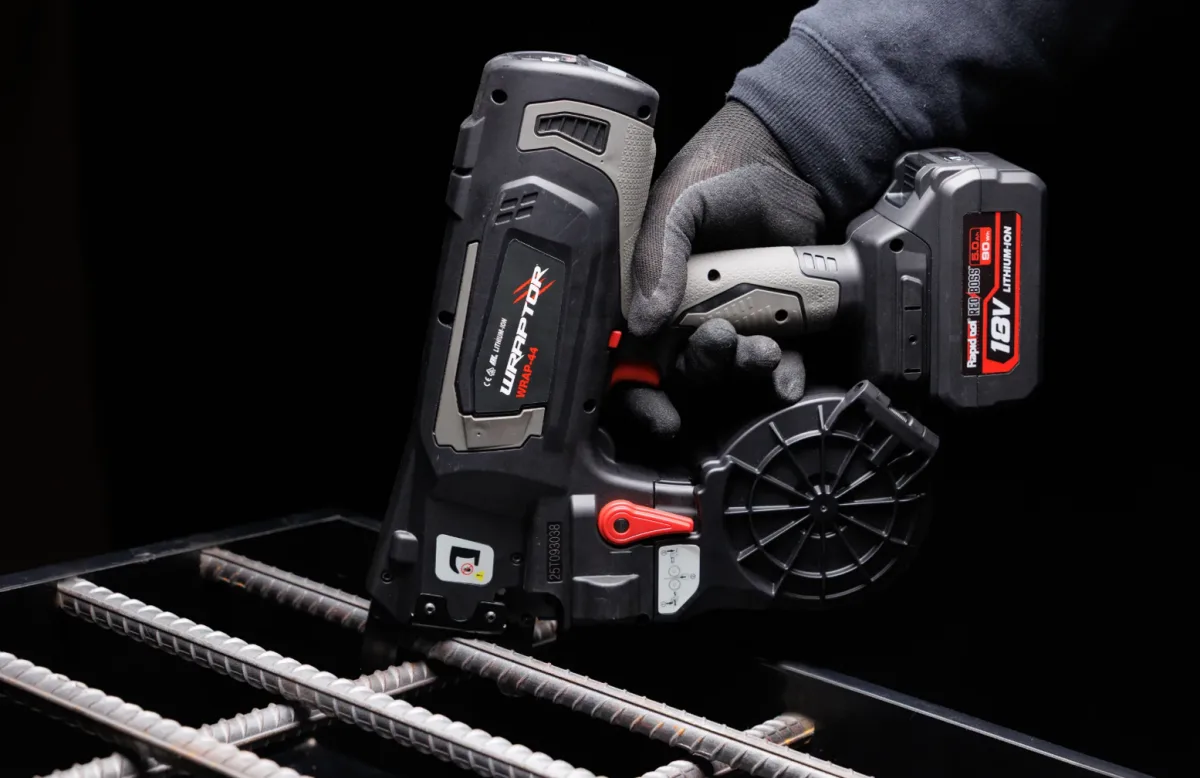
Anyone who has spent time tying rebar by hand knows how physically demanding the job can be. You’re constantly bending over and working in awkward positions as you twist wire repeatedly and handle heavy steel at the same time. After hours of repetitive tying, the strain on your hands, wrists, shoulders and back quickly adds up.
That’s one reason many Australian contractors are moving away from manual tying methods and using a powered rebar tying tool instead. These tools help automate repetitive work allowing crews to work quicker while reducing physical stress on-site.
At RAPIDTOOL, you can find rebar tying tools designed to handle the tying process with minimal effort. Instead of manually twisting the wire with pliers over and over, you can simply position the tool and pull the trigger, and it will tie the steel bar as well as cut the wire for you.
The physical strain of manual rebar tying
Manual rebar tying may seem straightforward, but it puts a lot of stress on your body throughout the workday.
The National Institute for Occupational Safety and Health (NIOSH) compared the ergonomic risks of hand tying rebar with pliers versus using powered rebar tying tools during the construction of a freeway bridge deck. The study found that manually twisting tie wire with pliers involved rapid, repetitive and forceful hand and wrist movements associated with an increased risk of hand-wrist disorders. Workers tying rebar at ground level were also exposed to sustained bending and stooping postures that increased the risk of low-back and other musculoskeletal injuries. Powered tying tools significantly reduced these ergonomic risk factors.
If you’re exposed to this type of repetitive movement day after day, you may notice how quickly fatigue builds and can affect both your comfort and productivity.
How powered rebar tying tools help reduce fatigue
With a rebar tying machine, you can remove much of the repetitive strain involved in manual tying.
These tools significantly reduced harmful hand and wrist movements compared to tying rebar manually with pliers. You will experience less strain, especially when using extension handles that allow you to tie rebar at ground level without constantly stooping or bending forward.
Additionally, rebar tying tools help you work much faster, since they tie rebar more quickly than hand-twisting wire manually. This means that you and your team can finish reinforcement work more efficiently while reducing physical exhaustion throughout the day.
How RAPIDTOOL rebar tying tools support contractors
RAPIDTOOL gives you a range of rebar tying tools designed for demanding construction environments. In our lineup, you’ll find the WRAPTOR WRAP-44 max. 44mm along with replacement tie wire coils.
These tools are built to allow efficient and consistent work when tying steel bars on site. With the WRAPTOR WRAP-44 1.3mm rebar tying machine, you can complete a tie in as little as 0.5 seconds.
You can also get an electronic extension arm so you don’t have to stoop awkwardly or overreach while tying rebar.
Combined with strict quality control and product testing, these tools help improve your comfort and reduce fatigue so you can maintain productivity throughout demanding projects.
Find the right rebar tying tool for your crew
If you’re looking for a rebar tying tool that can help reduce strain and improve efficiency on-site, explore the range at RAPIDTOOL Australia. For expert advice or to compare rebar tying tools, contact the RAPIDTOOL team on Australia-wide Freecall 1800 955 755. Prefer to send a message? Email [email protected] to get started.